
Skin Tightening
HIFU vs Endolift: Understanding Two Non-Surgical Treatment Options
HIFU and Endolift may both be discussed for facial tightening and contour concerns, but the technologies and treatment approaches are different.
August 25, 2026
Why the distinction matters
HIFU and Endolift are both discussed in conversations about facial tightening and contour, but they are not interchangeable. They deliver energy in different ways, involve different treatment experiences and may suit different concerns. A person interested in a non-surgical option still needs an assessment to understand what is contributing to the appearance of laxity or reduced definition.
Skin quality, tissue thickness, facial structure, age, previous procedures and expectations can all influence suitability. Comparing technology names without considering these factors can lead to unrealistic assumptions about what either option can achieve.
What HIFU is
HIFU uses focused ultrasound energy delivered from the skin surface to selected depths. It may be discussed when gradual support for firmness or definition is desired and when the clinical assessment suggests that focused energy is appropriate. The treatment does not involve placing a fibre beneath the skin.
Treatment sensation varies, and protocols depend on the device, area and individual. Changes, where achieved, generally develop over time rather than appearing as an immediate surgical-style lift. The degree and duration of response cannot be guaranteed.
What Endolift is
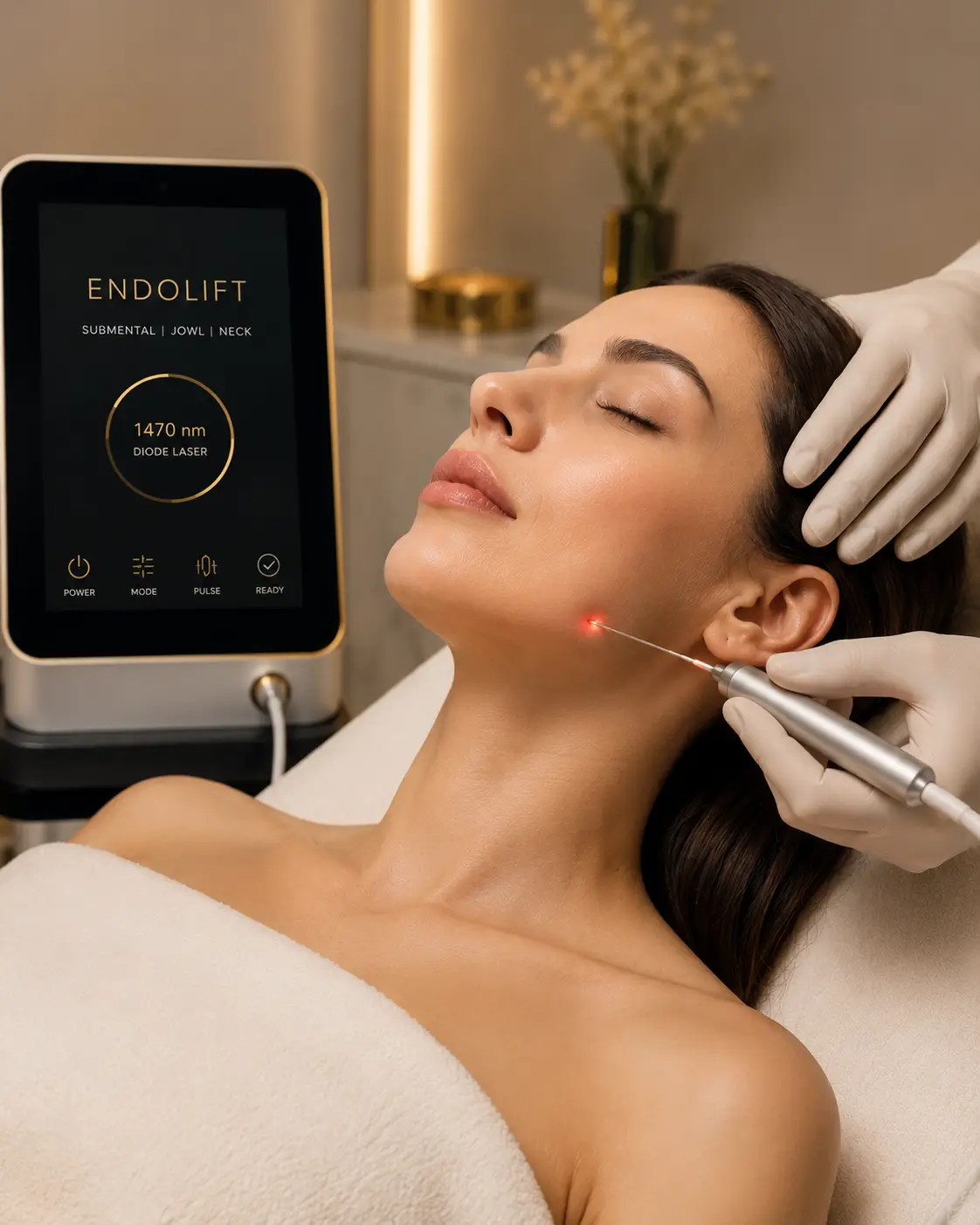
Endolift is a minimally invasive laser-based procedure in which a fine optical fibre is introduced beneath the skin in selected areas. It may be discussed for tissue tightening, contour concerns or areas where a more targeted subdermal approach is considered appropriate.
Because the technique works beneath the skin, the consultation and recovery discussion differ from a surface-delivered treatment. Suitability depends on anatomy, tissue characteristics, medical history and the area being considered.
How the technologies differ
The central difference is delivery. HIFU focuses ultrasound energy from outside the skin, while Endolift delivers laser energy through a fine fibre beneath the skin. These mechanisms influence treatment planning, sensation, aftercare and the types of changes that may reasonably be discussed.
Neither technology should be selected simply because it sounds stronger or newer. The appropriate depth, area and treatment intensity depend on clinical judgment. In some cases another approach—or no procedure—may be preferable.
Areas commonly considered
Both treatments may be discussed for selected areas of the lower face, jawline or neck. HIFU can also be considered in other facial areas depending on device protocol and suitability. Endolift planning is similarly individualized and depends on where subdermal treatment can be performed safely and meaningfully.
A concern that looks like laxity may also involve volume change, muscle activity, skin texture or skeletal proportion. Treating only one component may not address the complete picture.
How results may develop
HIFU-related changes are generally described as gradual because the tissue response evolves over time. Endolift may involve an early contour change together with longer-term tissue response, but the pattern varies. Review timing should reflect the technology used and the individual healing process.
Before-and-after photographs can help document change, yet they should be interpreted carefully. Lighting, expression and angle can influence appearance. Dr. Ali discusses realistic ranges rather than promising a fixed result.
Recovery considerations
After HIFU, temporary tenderness, redness, swelling or altered sensation may occur. After Endolift, swelling, bruising, tenderness or treatment marks may be more relevant because of the minimally invasive technique. The exact recovery experience depends on the area and individual response.
Patients should receive clear aftercare guidance and understand when to contact the treating team. Scheduling should allow for personal commitments and the possibility that visible recovery may last longer than expected.
Who may consider each option
HIFU may be discussed for someone seeking a non-invasive energy treatment with gradual development and whose tissue characteristics are suitable. Endolift may be considered when a more targeted subdermal approach aligns with the concern and the person accepts the procedure and recovery involved.
These descriptions are not eligibility rules. Medical conditions, medications, implants, previous treatments and skin or tissue findings can change the recommendation. Consultation is required before deciding.
Treatment planning with Dr. Ali
A useful plan begins with the concern rather than the device. Dr. Ali assesses the face and skin, reviews treatment history and discusses the degree of change that would feel appropriate. He can then explain whether HIFU, Endolift, another option or observation is the more considered path.
Non-surgical does not mean risk-free or equivalent to surgery. A balanced consultation includes limitations, alternatives, expected recovery and a review strategy so that decisions remain measured and individualized.
Making an informed comparison
When comparing the two options, ask what tissue layer is being targeted, why that depth relates to your concern and what degree of change is realistic. It is also useful to discuss discomfort management, visible recovery, review timing and whether future maintenance may be considered. These practical details can be more important than choosing the technology with the most dramatic marketing language.
A treatment plan should also account for what the technology cannot correct. Pronounced laxity, significant volume change or a concern driven mainly by skin surface quality may require a different conversation. Understanding limitations protects against overtreatment and helps align the selected procedure with a specific, achievable objective.
Timing matters as well. An early appearance after treatment may reflect temporary swelling or tenderness rather than the final response. The recommended review interval allows tissue changes to develop and gives the clinician a more reliable basis for comparison. If another procedure is being considered, spacing treatments appropriately can reduce confusion about which intervention produced a change and can support safer, more deliberate planning. Keeping notes about recovery and taking photographs under consistent lighting can make follow-up more useful. It also helps distinguish a genuine tissue response from day-to-day changes in hydration, expression or camera angle.
RELATED INSIGHTS
Continue Reading.
PERSONAL CONSULTATION
Considering an
Aesthetic Treatment?
A personal consultation can help determine which treatment approach may be appropriate for your concerns and individual goals.